
Bridging the Gap: Between Recreational Avalanche Courses and Higher Level Decision Making and Ski Mountaineering

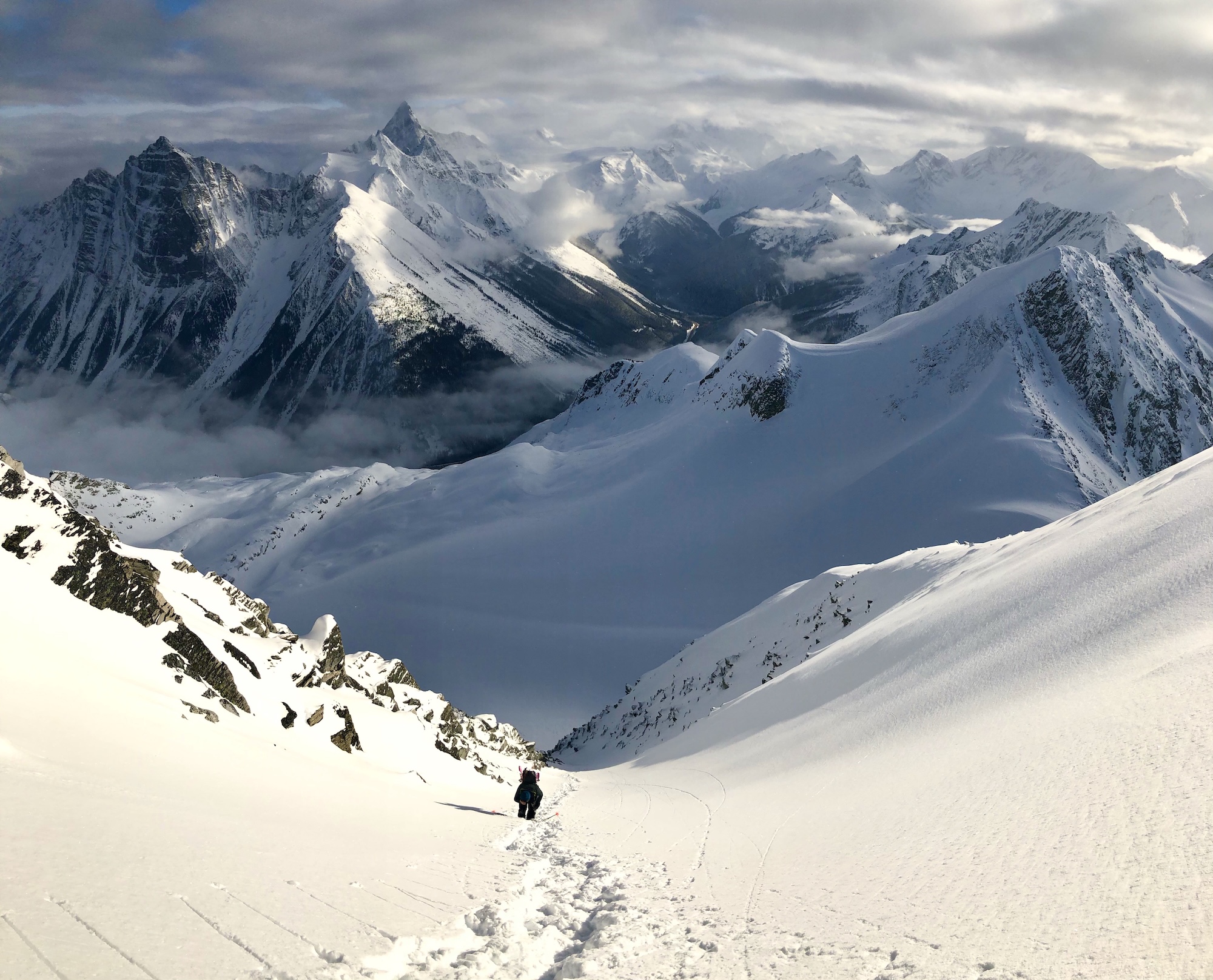
Recently, the international ski mountaineering community has been shaken by a sobering string of high-profile accidents. From the European Alps, the Himalaya, the Andes to the high peaks of Western Canada, we have witnessed seasoned, incredibly fit winter athletes get caught by avalanches in complex avalanche terrain, step through cornices, fall victim to glaciated hazards or fall in consequential terrain.
These tragedies point to a critical systemic vulnerability in our sport: a widening experience gap between traditional recreational avalanche education and the high-consequence reality of ski mountaineering. Ski and snowboard media and the general backcountry industry have always hyped those who push the envelope. It's human nature to expand the boundaries of what is possible, but the truth is, if you live by the sword, there is a chance you will die by the sword...and even if you keep in reasonably mellow, there is always an inherent risk to backcountry skiing and splitboarding.
Standard recreational courses (like AST or AIARE) are fantastic at teaching companion rescue and conservative terrain management. But they are designed to keep you in relatively straightforward terrain. When you step into the high alpine—where you face big descents, complex glaciation, overhead hazard, and technical rope work—classic avalanche education doesn't prepare you properly for that realm.
To survive and thrive in big mountains, you don't just need a certificate. You need professional-grade operational habits.
This is exactly why the Arctos Guides’ Rogers Pass Ski Mountaineering: Mentored Big Mountain Week is an evolutionary step for serious winter recreationists.
Many of the recent accidents in high-alpine terrain boil down to three main blind spots:
-The Illusion of Fitness vs. Technical Skill: Being fit enough to crush a 3,000-vertical-meter day does not mean you understand the nuances of spatial variability, complex avalanche and glaciated terrain or a mandatory rappel into a steep couloir.
-Static Decision Making: Avalanches in big mountain terrain require dynamic, real-time forecasting. Conditions shift by the hour as wind, sun, and temperature affect the environment in which you travel.
-Time in Terrain and Understanding that it doesn't always have to be gnarly to be fun: Believe me, I've been there, if it wasn't steep and deep, I didn't want to ski it. But through time, experience, getting spanked and fortunately lucky, I have grown to understand there is a time to send and a time to enjoy some nice powder skiing in mellow terrain. The evolution of one's understanding and risk management process is a continuum built on experience and time in the mountains; it is not stagnant.
How the Big Mountain Mentored Week Bridges the Divide
The Arctos Guides program isn’t a passive vacation where you just harvest powder behind a guide. Based out of Golden, BC, and operating in Rogers Pass, the Purcells, and the Canadian Rockies, this six-day immersive experience is designed to simulate a professional-level course.
Here is how it directly targets the gaps causing recent backcountry accidents:
1. Become an Independent Forecaster
You don’t just show up to the trailhead and go skiing, we teach you how to develop a risk assessment process. Students participate in twice-daily guides' meetings, weather forecasting, collaborative avalanche hazard forecasting, run-lists and route planning. You are treated as an active expedition partner, learning the exact operational structure professional guides use to keep teams alive in high-consequence terrain.
2. Mastering Technical Rope Systems & Steep Entrances
Days 1 and 2 of the course dive deep into the fabled couloirs of the Kicking Horse slackcountry (Dogtooth Range). Under supportive ACMG/ AMGA guidance, you practice technical rope systems, manage steep entrances and cornice hazard, build anchors, and execute mandatory rappels.
3. Real-World Glaciated Terrain Management
Moving through Days 3 to 6 in Rogers Pass and the Rockies, the focus shifts to glacier travel, complex terrain management, and crevasse rescue. You will learn how to read a changing snowpack over 1,500m to 2,400m of vertical daily travel, ensuring your macro-planning matches real-time micro-terrain realities.
4. The Power of a 4:1 Mentorship Ratio
Nature Doesn't Care About Your Ambition or Whether You Are an Expert
The mountains of Western Canada offer some of the most spectacular, rewarding ski mountaineering on earth—but they are entirely unforgiving. The recent spike in alpine accidents reminds us that enthusiasm and physical fitness are no substitute for rigorous, collaborative mentorship and even then, the mountains don't care if you are an expert. Recent high profile accidents involving extremely experienced and educated people show us that the mountains are a harsh learning environment and respect, patience, sound decision making and luck are all part of surviving a lifetime of high mountain travel.
If you are an experienced backcountry tourer ready to step into the world of true expedition skiing, steep terrain, and glaciated alpine travel, you owe it to yourself—and your partners—to upgrade your education.
Learn to think like a professional; sign up for our Feb 15-21, 2027 course linked below:
https://arctosguides.com/trip/rogers-pass-ski-mountaineering-mentored-big-mountain-week-in-bc-canada